

Material & care · 4 min
316L stainless steel in jewellery: properties, quality, differences
No, stainless steel does not tarnish. Why that is, where the limits lie, and how to tell 316L from anything merely labelled stainless steel.
ORVAIN Editorial · · updated

Contents
No. Stainless steel does not tarnish. That is the one difference from silver that decides it for most people – no polishing, no darkening in the drawer, no black rim after a fortnight.
The longer answer is more interesting, because it explains why, and where the limit runs.
Why silver darkens and steel does not
Silver reacts with sulphur compounds in the air. The product is silver sulphide – a dark film on the surface. It happens slowly but relentlessly, even in a closed box. It is not a fault but a property of the metal; it simply asks for regular polishing.
Stainless steel behaves differently in kind. The alloy contains chromium. At the surface that chromium binds with oxygen from the air into a vanishingly thin, transparent layer – the passive layer. It is only a few nanometres thick and it protects the metal beneath.
The decisive part: scratch that layer, and in the presence of oxygen it rebuilds itself. Stainless steel repairs its own surface. This is why it is called stainless rather than coated – there is no coating that could come off.
What separates 316L from other stainless steels
"Stainless steel" is not a protected term, and that is the catch. The designations mean quite different things:
- 304 (also 1.4301) is the most common stainless steel there is – pans, sinks, railings. Chromium and nickel, no molybdenum.
- 316L (also 1.4404) additionally contains molybdenum, typically 2 to 3 per cent. Molybdenum markedly increases resistance to chlorides – that is, to sweat, salt water and pool water.
- The L stands for low carbon. A reduced carbon content lowers the risk of chromium carbides forming during soldering, which would leave the alloy vulnerable at the joints.
For a bracelet worn daily against skin and in contact with sweat, that is exactly the relevant difference. The composition is standardised under EN 10088 and AISI 316L – a checkable specification, not a marketing word.
So where a label says only "stainless steel", anything could be inside. Where it says 316L, a specific alloy is meant.
Where the limit runs
The passive layer is robust, not invulnerable. Three things wear it down:
- Chlorine over time. An afternoon in a pool is uncritical; daily over months leaves marks.
- Salt water, especially if the piece is not rinsed and the salt dries on it. Rinsing matters more than avoiding.
- Aggressive cleaners containing bleach or abrasive. A silver polishing cloth is unnecessary on steel and does the polish more harm than good.
Showering, sweating, rain, hand soap: all unproblematic. If you never take your bracelet off, you are doing nothing wrong.
What we deliberately do not claim: that our bracelets withstand prolonged water contact, salt water or chlorinated water without restriction. Statements like that require testing, and we do not have it.
See the four forms
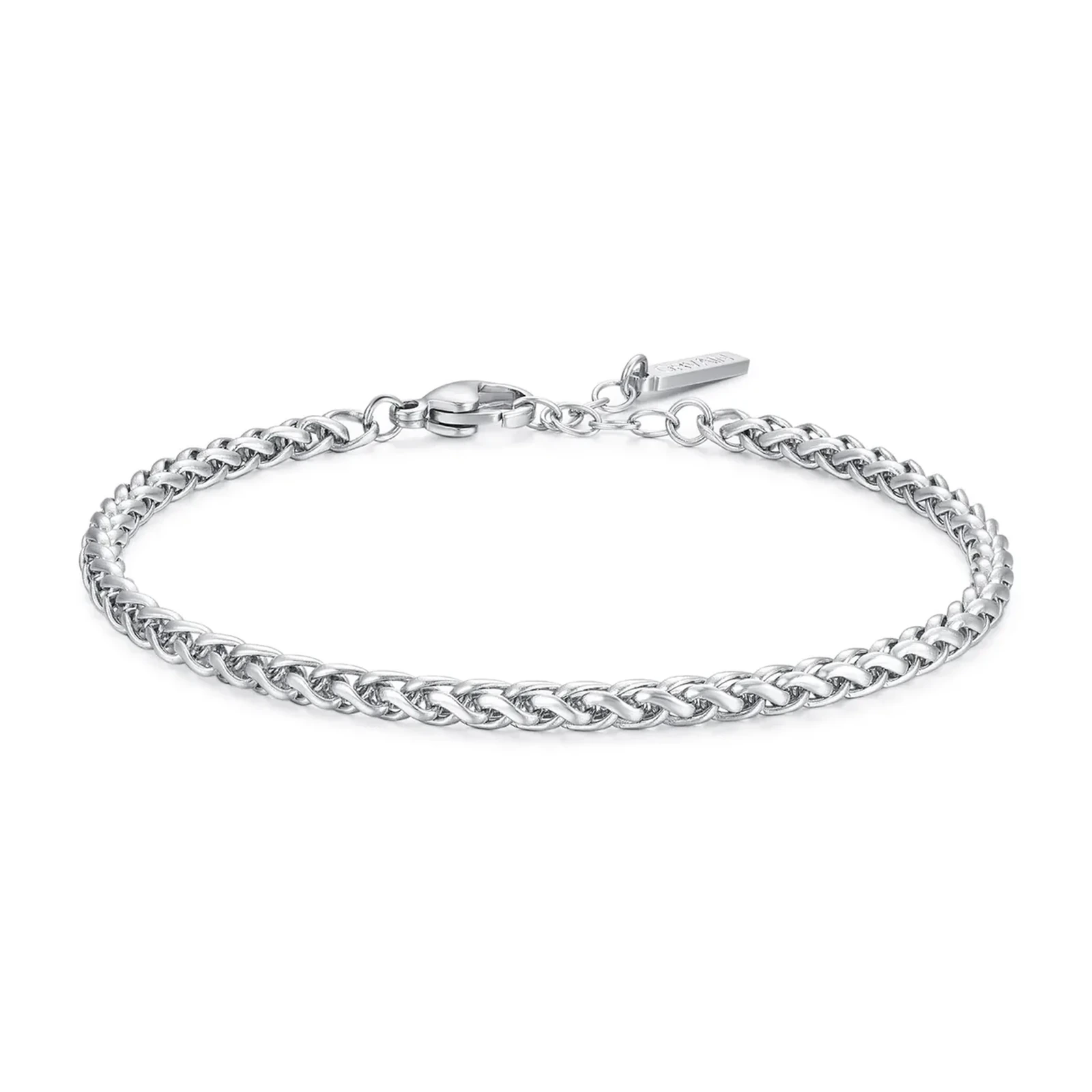
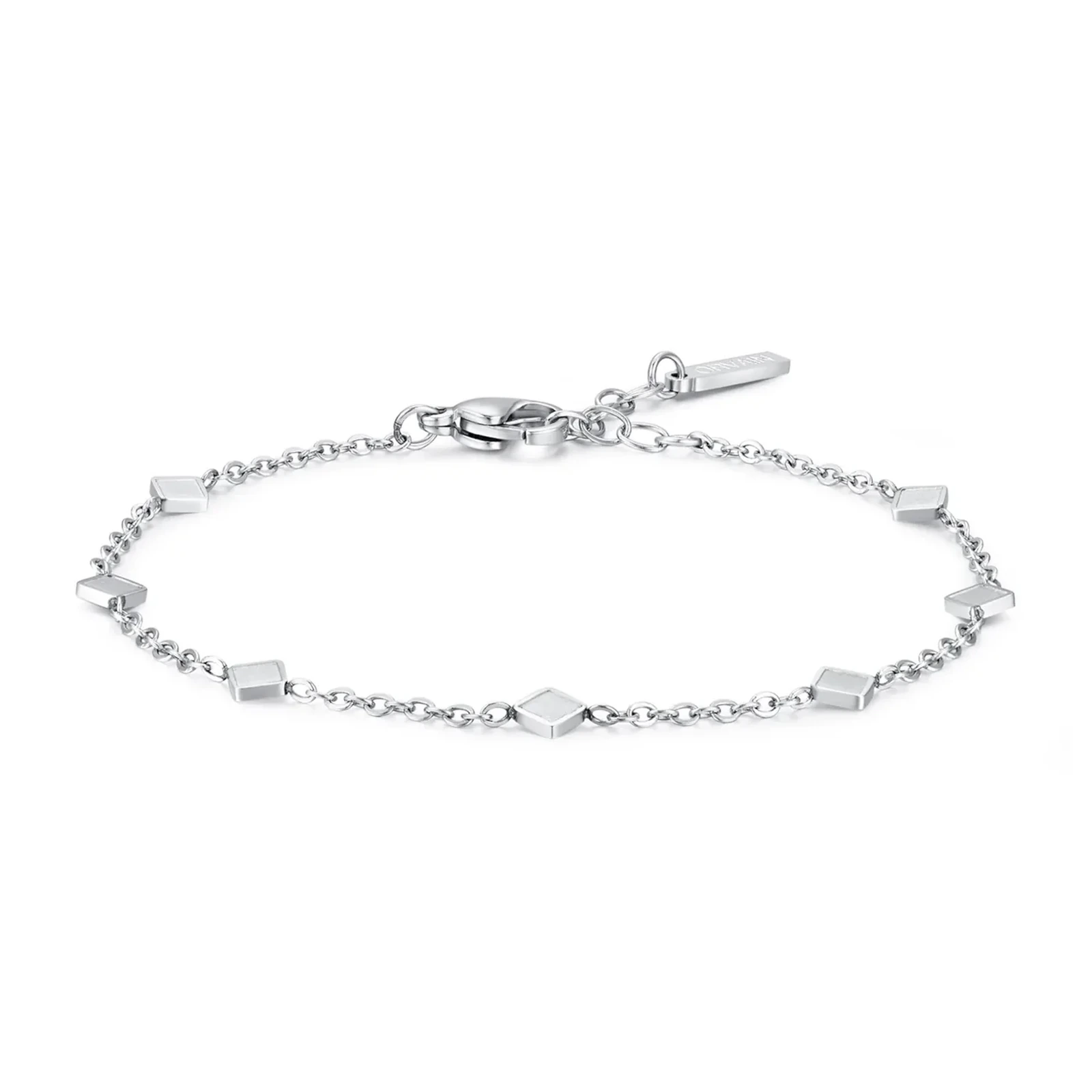
Scratches: what is normal
Polished stainless steel picks up fine scratches. That is not a question of quality but of physics – a mirrored surface shows every disturbance, a brushed one hides it.
After some months of daily wear a fine web of micro-scratches appears. Visible up close, invisible at arm's length. Many wearers prefer that state to the new one, because the surface then reads quieter and mirrors less.
It can be polished out, but only properly. Doing it at home with paste and cloth removes material unevenly and creates waves that are more conspicuous than the scratches were.
Nickel and sensitive skin
316L contains nickel – bound in the alloy, not free at the surface. That is why most people with a nickel allergy wear steel jewellery without trouble.
In regulation this is handled through nickel release, not nickel content: the EU chemicals regulation REACH limits, in Annex XVII entry 27, how much nickel an article may release during prolonged skin contact. A low content on its own says little – release is the measurable quantity.
For you that means: if you know you react to metal buttons or spectacle frames, wear a new piece for a day before relying on it. We make no claim about the skin tolerance of our pieces – that would require testing we cannot show.
How to recognise good work
Beyond the alloy there are three checks that need no tools:
- Weight. Hollow chains feel light and bend. Solid links have heft – you notice it in the hand immediately.
- The inside. Run a fingernail along the inside of the chain. If it catches anywhere, the joints were not dressed.
- The clasp. A lobster clasp should close against resistance and click audibly. If it opens under light pull, the spring is too weak.
More on this in the piece on the four chain constructions – construction also decides how much of the workmanship is visible at all.
Care, in one sentence
Warm water, a drop of washing-up liquid, a soft toothbrush, rub dry. Nothing more is needed – and nothing more should be done.
How each of our four forms answers light is described at the pieces themselves. The verified material figures are here.
How ORVAIN uses the material, and how it reads across the four forms, is in the material feature.
Common questions
Can I shower wearing a stainless steel bracelet?
Water and hand soap do 316L no harm. We still give no clearance for prolonged water contact, because that would require testing. To be safe, rinse the piece after chlorine or salt water and rub it dry.
Is 316L better than 304?
For jewellery, yes. The molybdenum in 316L increases resistance to chlorides – that is, to sweat and salt water. For objects without prolonged skin contact the difference barely matters.
Why does one steel bracelet cost more than another if the material is the same?
Because material is rarely the cost driver. The difference is in the work: whether every link was closed individually and the joint dressed, how clean the polish is, and how much metal is actually there.