

Stainless steel
The alloy commonly used in jewellery. What it is and how it differs from sterling silver is covered in the Journal.
ORVAIN
ORVAIN makes bracelets in 316L stainless steel. Four constructions, one finish, no gender.
Position
ORVAIN designs bracelets for people who want restrained designer jewellery – clear in form, without a logo, without a gesture.
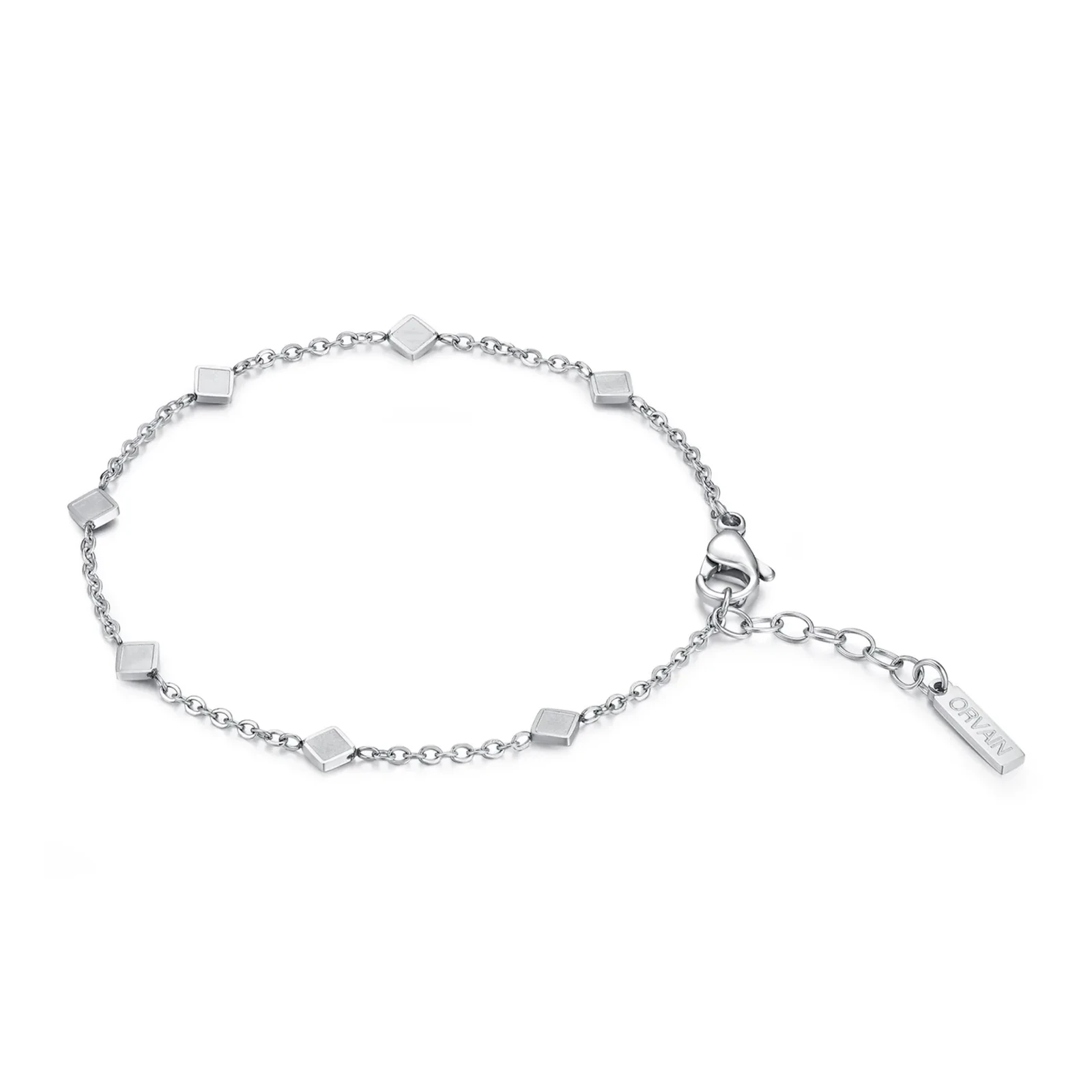
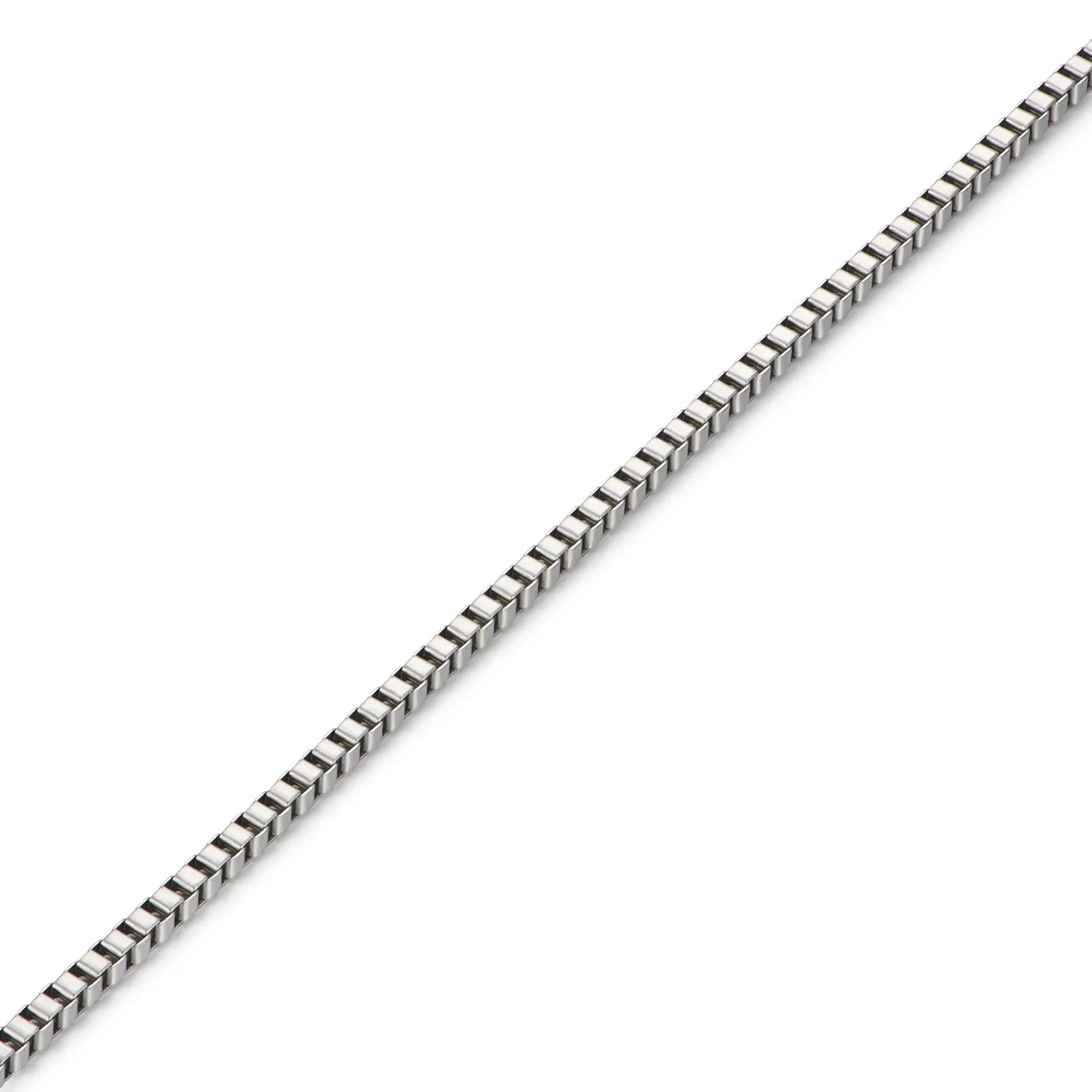
The collection is four forms. They differ not in material or finish but only in how the chain is built: flat and closely set on the Cuban, rectangular and continuous on the Linear, woven and softly rounded on the Serpentine, interrupted by square elements on the Santorini.
Every bracelet is 316L stainless steel, polished and silver-tone. Every one closes with a lobster clasp and carries an extender chain with the brand tag. Every one is cut unisex.
Verified
These four statements apply unchanged across the whole Core Collection.
The alloy commonly used in jewellery. What it is and how it differs from sterling silver is covered in the Journal.
Polished and silver-tone – not silver, and no coating we would claim without having verified it.
Lobster clasp with an extender chain. The fit adjusts within limits, without committing to one fixed size.
The forms are not designed by gender. Wrist circumference decides what fits, not a department.
Material
316L is a stainless steel alloy containing chromium. At the surface it forms a thin passive layer that rebuilds itself after scratches in the presence of oxygen.
Sterling silver behaves differently: it reacts with sulphur compounds in the air and darkens. That is not a fault but a property – one that asks for regular polishing.
We make no statements about skin tolerance, water resistance or durability that we cannot support. Where a figure is missing, it is missing on purpose.
The full explanation is in the piece on 316L stainless steel. The four forms themselves are under The Four Forms.
Client Services
Questions about form, fit or care are answered in writing. Usually within one working day.
New pieces, new writing in the Library. Four letters a year, no more.
Necessary cookies keep the site working. With your consent we also measure anonymously how the site is used. Privacy policy