

Size & fit · 4 min
Measuring for a bracelet: size guide for men
Two minutes, a strip of paper, a ruler. And the one number that separates "sits" from "annoys" – with a table and the three mistakes people make.
ORVAIN Editorial · · updated
Contents
Measure your wrist with a strip of paper, just behind the wrist bone. Add 2 to 2.5 cm. That is your bracelet length.
At a 17 cm wrist you land at roughly 19 cm. The rest of this piece explains why the allowance matters more than the measurement – and why the construction of the chain changes it.
The measurement
You need a strip of paper, a pen and a ruler. Not a fabric tape – those stretch and read long.
- Cut a strip about a centimetre wide.
- Lay it around the wrist just behind the wrist bone, where the bracelet will sit.
- Draw it in until it touches without pressing.
- Mark the overlap and measure the strip flat.
The result is your wrist circumference. Not your bracelet length.
Without tape, without paper
A charging cable or a shoelace does the job: wrap once, pinch the spot, lay it straight against a ruler. Two or three millimetres of error do not matter – the extender chain absorbs them.
The allowance
A bracelet exactly as long as your wrist wears like a shackle. It has to move. How much you add depends on how you want it to sit:
| Allowance | How it sits | Suits |
|---|---|---|
| 1 – 1.5 cm | close, barely slides, does not turn | edged forms that otherwise travel |
| 2 – 2.5 cm | the usual fit, moves a little | almost every case |
| 3 cm and up | falls onto the back of the hand when the arm hangs | a deliberate style choice |
If you fall between two sizes, take the larger. The extender lets you take up slack; it cannot add length.
Why construction changes the fit
Two bracelets of identical length can sit differently. The reason is how mobile the chain is:
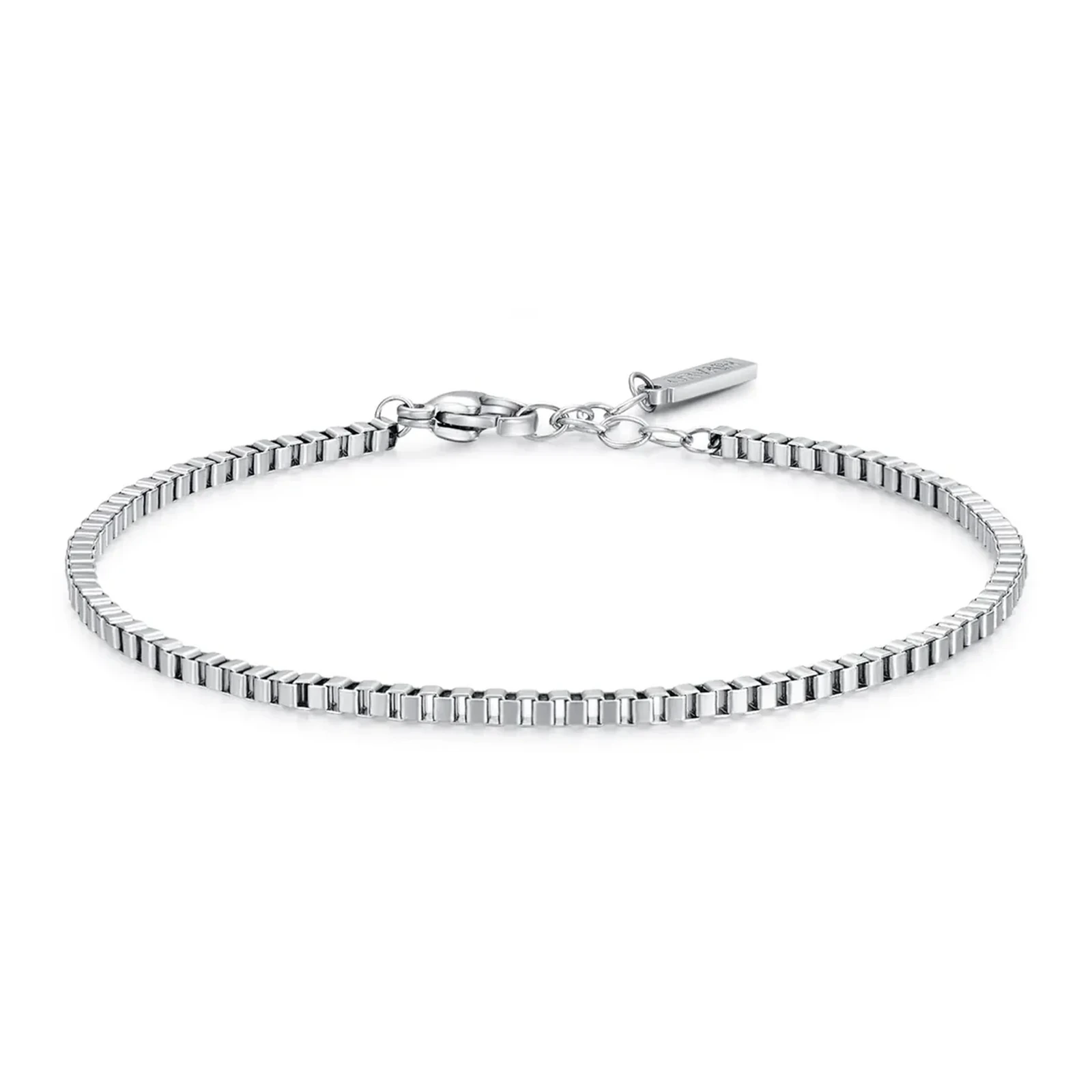
- Edged, stiff chains like the box chain roll rather than settle. Given too much allowance they travel around the wrist and end up showing the clasp at the front. Here the tighter allowance is the better call.
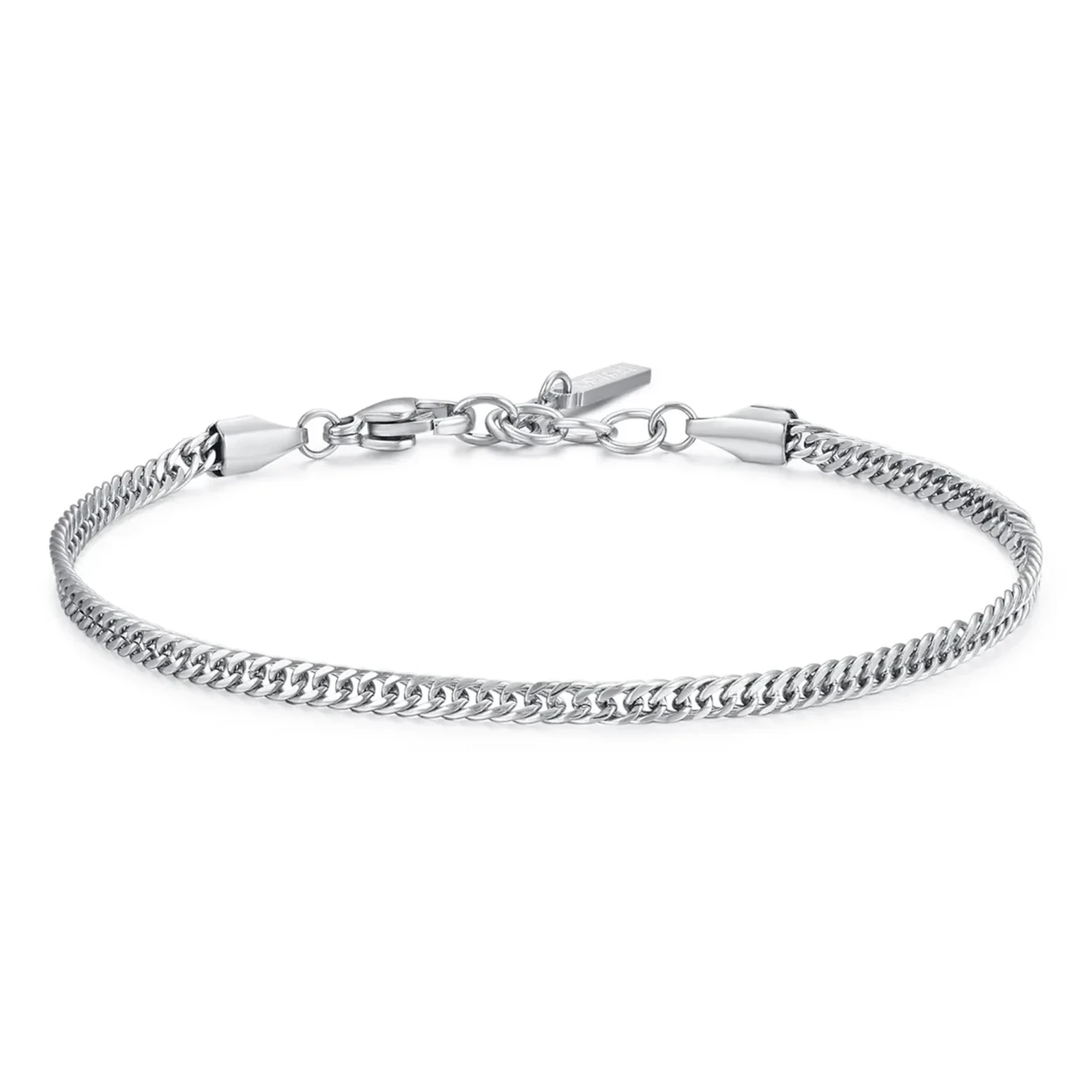
- Mobile, flat chains like the curb chain follow the wrist and barely turn. They tolerate more play without looking untidy.
- Woven chains are heavier and pull downward. Excess length shows more here than on light forms.
Which form behaves how is covered in detail in the piece on the four chain constructions.
See the four forms
What the extender is for
Every one of our bracelets carries an extender chain at the clasp. The reason is mundane: wrists are narrower in the morning than in the evening, narrower in winter than in summer, and narrower before exercise than after.
With a few centimetres of play you need not commit to a millimetre at purchase. The practical value is larger than it sounds – it is the difference between a bracelet that annoys on some days and one you stop taking off.
Three mistakes people make
Measuring over the bone. The wrist is thicker there. Measure over the bone, add 2 cm, and you get a bracelet that lives permanently on the back of your hand.
Measuring seated with a bent arm. Circumference changes with posture. Measure with the arm loose and hanging.
Using the fabric tape from the sewing box. Those stretch over the years. A strip of paper and a ruler are more accurate.
Buying one as a gift without knowing the size
The most common case – and solvable. Three routes, in this order:
1. Measure a bracelet they already own. Lay it flat, measure clasp to clasp. Nothing is more accurate. 2. Estimate from the watch. Anyone wearing a watch strap gives you a reliable reference point. 3. Estimate from build and rely on the extender. Most adult wrists fall between 15 and 20 cm. The extender absorbs an error of one to two centimetres.
What not to do: estimate short. A bracelet that is too large can be worn. One that is too small cannot.
Two bracelets stacked
When stacking, the upper piece needs slightly more length, or it pushes the lower one away. Half a centimetre is usually enough.
Wear the heavier bracelet below, the lighter above. The other way round, the light one rides up constantly and ends up on the back of the hand.
Where our measurements are
Exact lengths and widths for the four forms are listed at the pieces themselves. What holds for all four – material, finish, clasp – is under verified properties.
Common questions
How loose should a bracelet be?
Loose enough to slide one finger flat between bracelet and wrist. If it passes over the wrist bone onto the back of the hand, it is too long. If it leaves a mark after an hour, it is too short.
Should I include the extender when measuring?
No. Measure the base length without the extender and treat the extender as reserve. That leaves you room in both directions.
What if I am exactly between two sizes?
Take the larger. The extender can shorten, it cannot lengthen. With edged forms like the box chain you may lean to the tighter side, since they otherwise travel.