Form & design · 3 min
Study I: Surface, Order, Movement and Interval
Four bracelets in one material, each given to one question. Why ORVAIN works in studies, and what Surface, Order, Movement and Interval actually mean.
ORVAIN Editorial ·
Contents
Most jewellery brands begin with a collection. ORVAIN begins with a study.
The difference is not cosmetic. A collection wants to be complete: something for every occasion, a step for every budget, a variant for every taste. A study wants to be exact. It takes one question and asks it until the answers differ.
Study I asks this: what makes a chain a form?
Four answers, one material.
One material, four constructions
All four objects are 316L stainless steel, polished and silver-tone. All four carry the same lobster clasp with an extension chain. All four are worn unisex.
That removes everything usually used to create difference: no second metal, no stones, no surface treatment, no logo. What remains is the construction – how the links stand in relation to each other.
That is precisely the point of the study. When only one parameter is left, it becomes visible how much that one parameter carries.
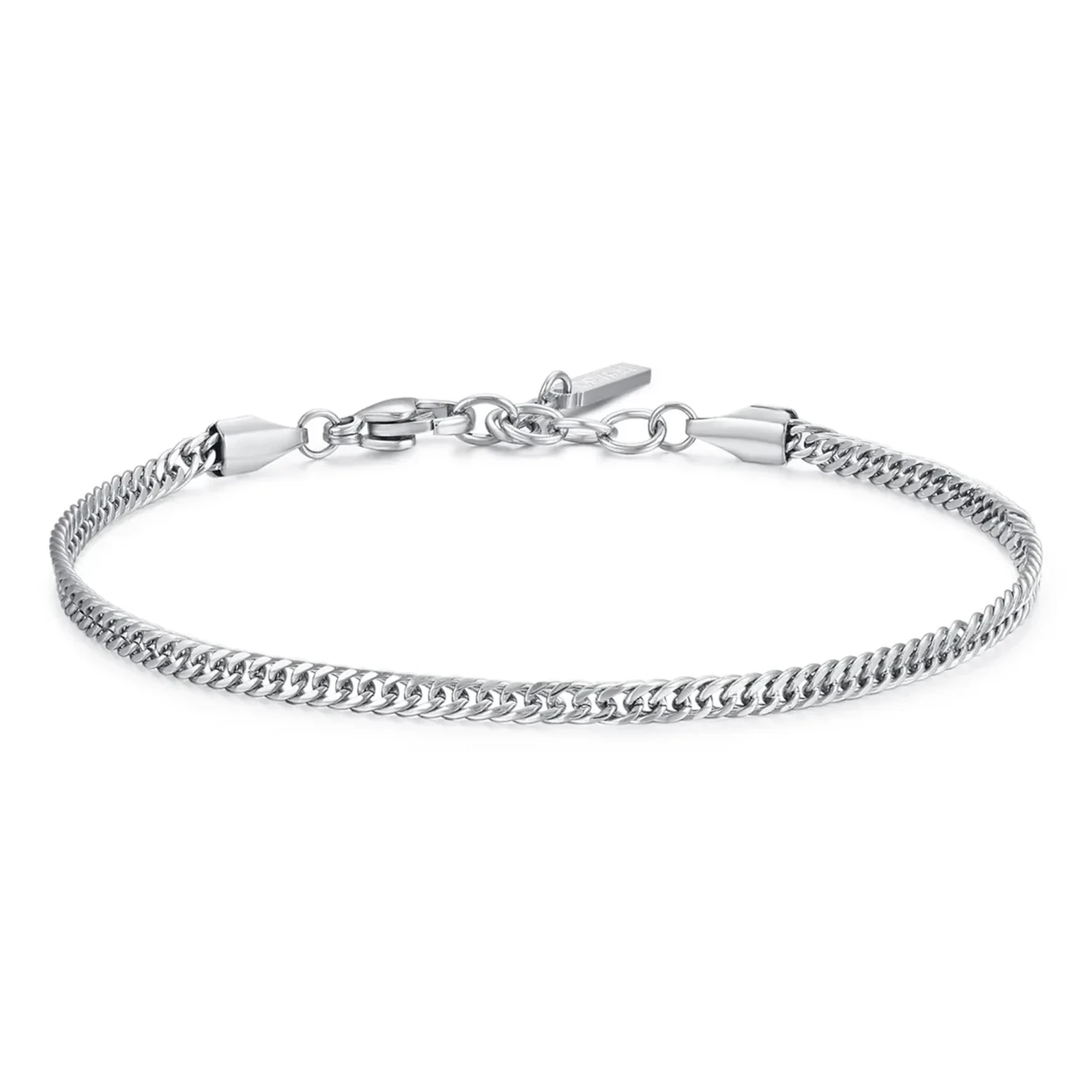
Object 01 – Cuban – Surface
Flat curb links align so closely that no gap remains. A chain becomes a plane.
The effect shows in the light: it does not travel across individual links but across the whole piece as one continuous band. You do not see a row of parts. You see a surface.
Cuban is the quietest of the four forms – and the one that looks least like jewellery.
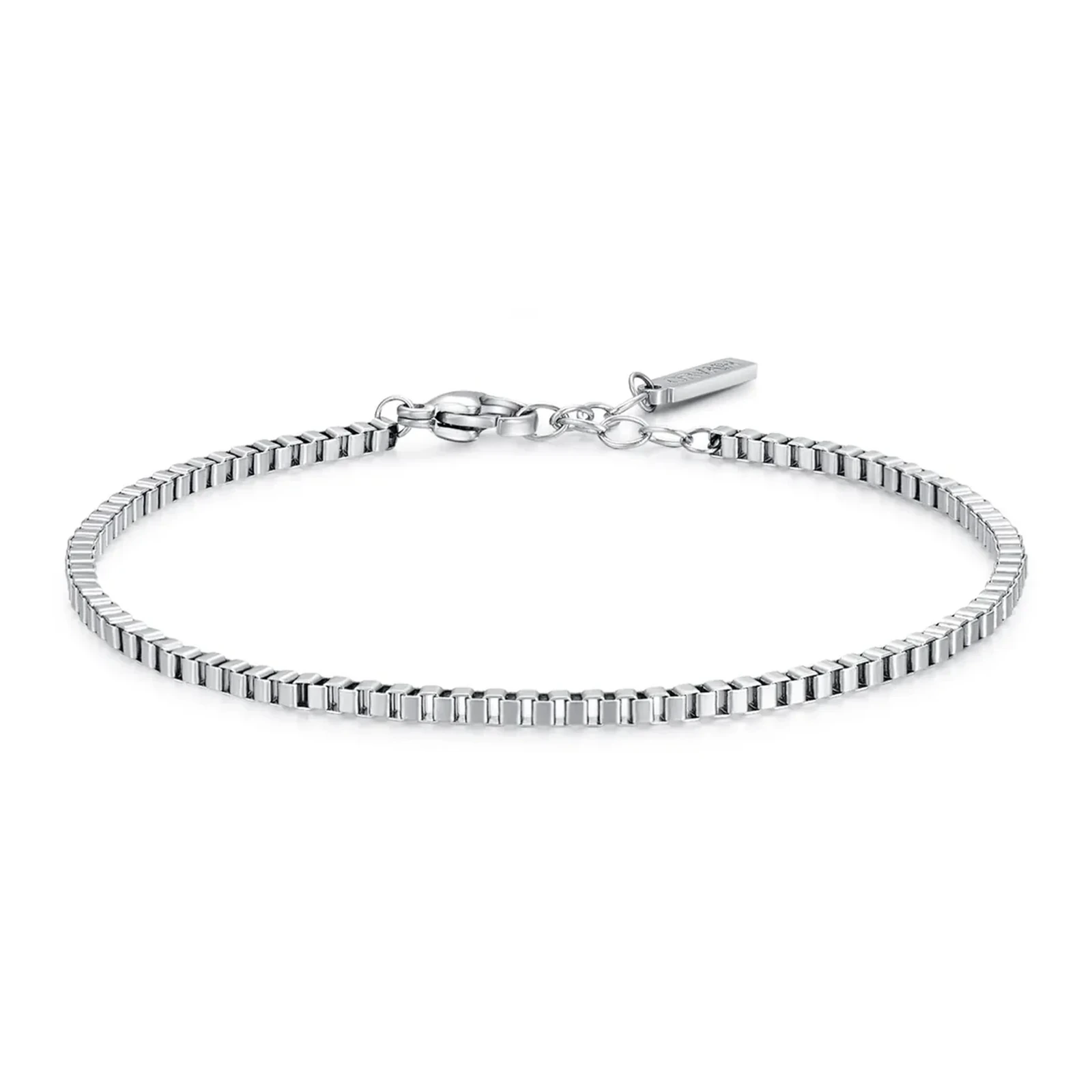
Object 02 – Linear – Order
One square link, repeated.
Repetition is the simplest way to make order visible and the hardest to do well: each link stays distinct and still produces one uninterrupted line. The moment one element falls out of step, the whole form falls apart.
Anyone who likes architecture will recognise the principle of a façade: it is not the single window that counts but the rhythm in which it returns.
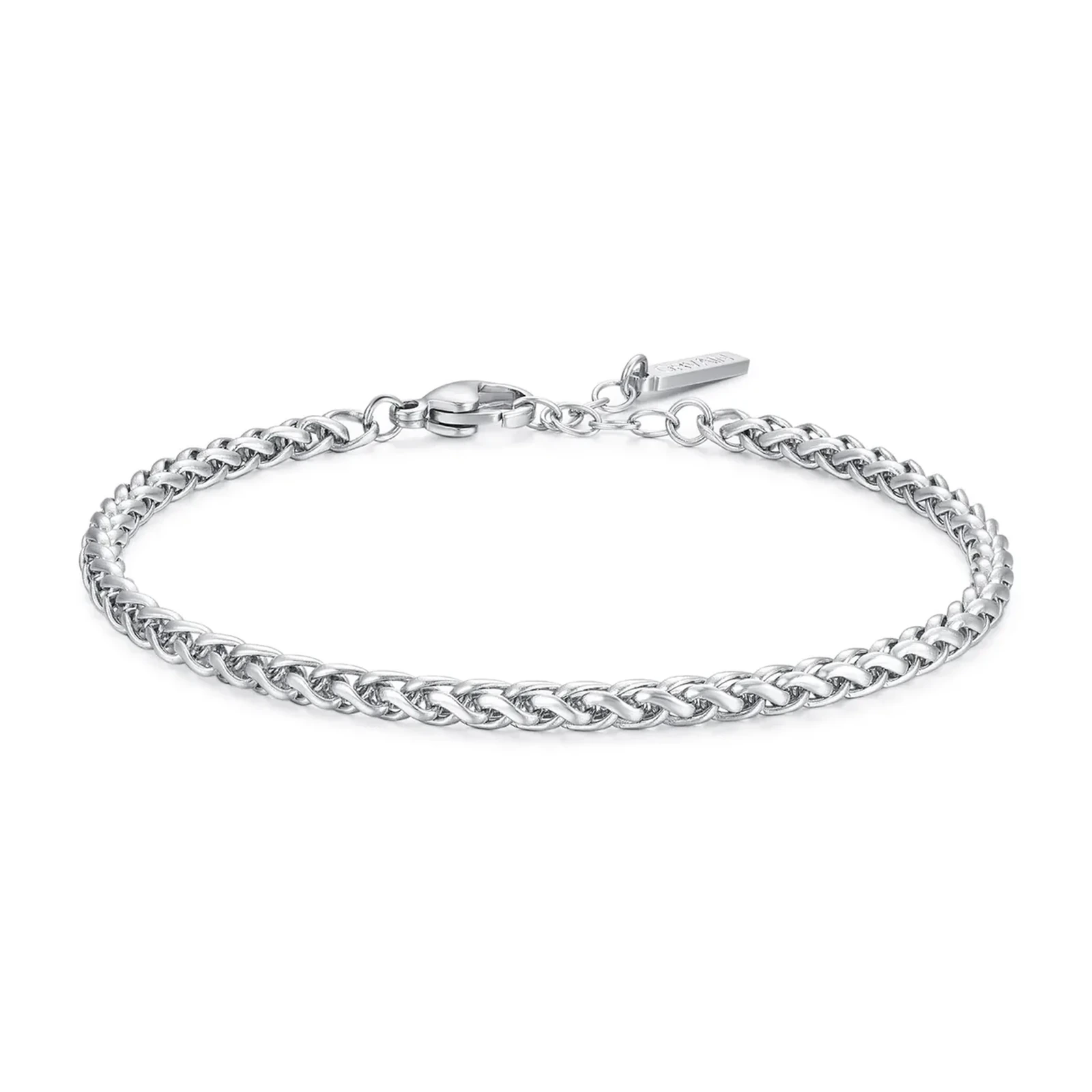
Object 03 – Serpentine – Movement
A densely woven construction, noticeably finer in its parts than the other three.
Density produces mobility. Because the elements are so small, the band follows the wrist rather than enclosing it – it lies along the arm instead of sitting on it. The character of this form only appears in movement; at rest it is the least conspicuous of the four.
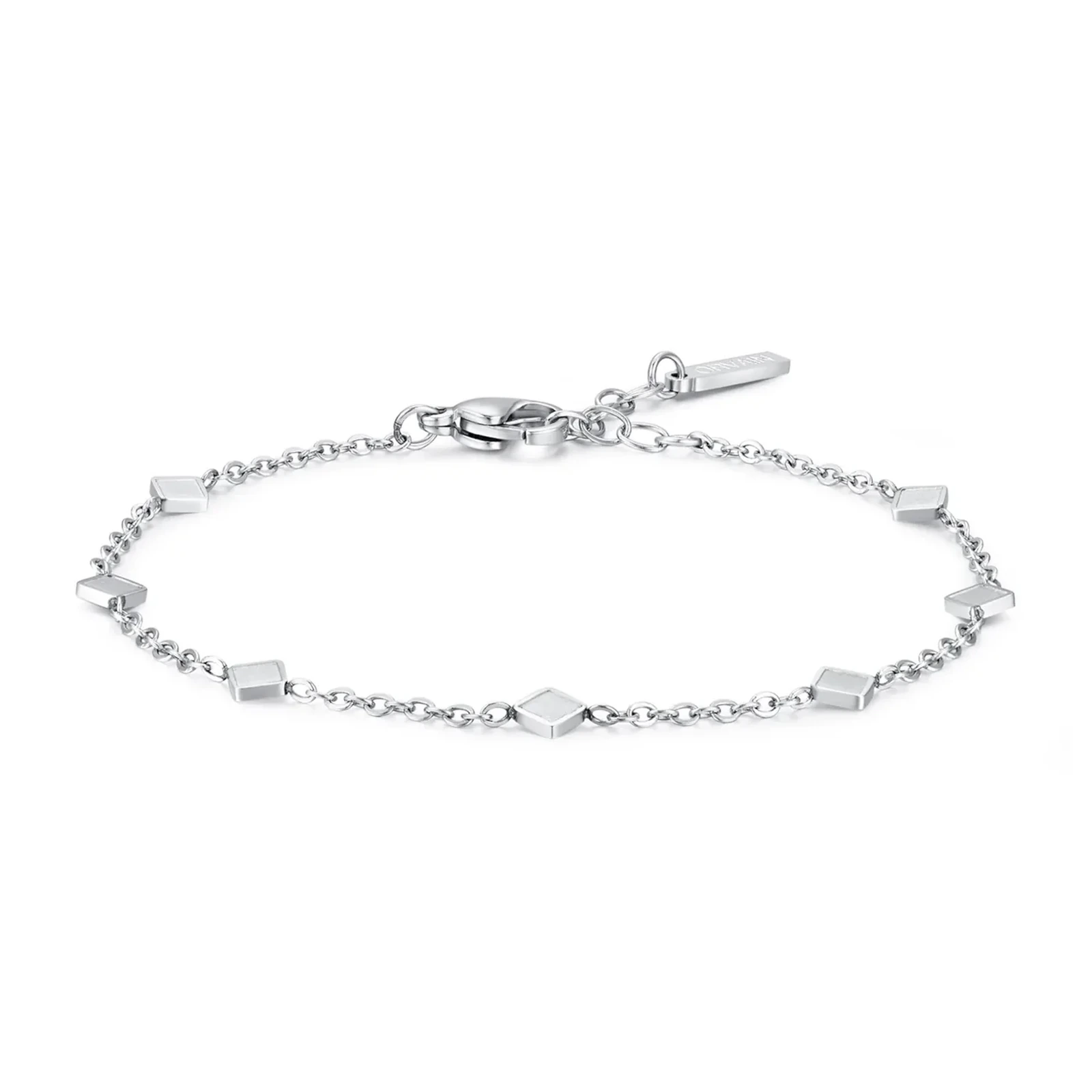
Object 04 – Santorini – Interval
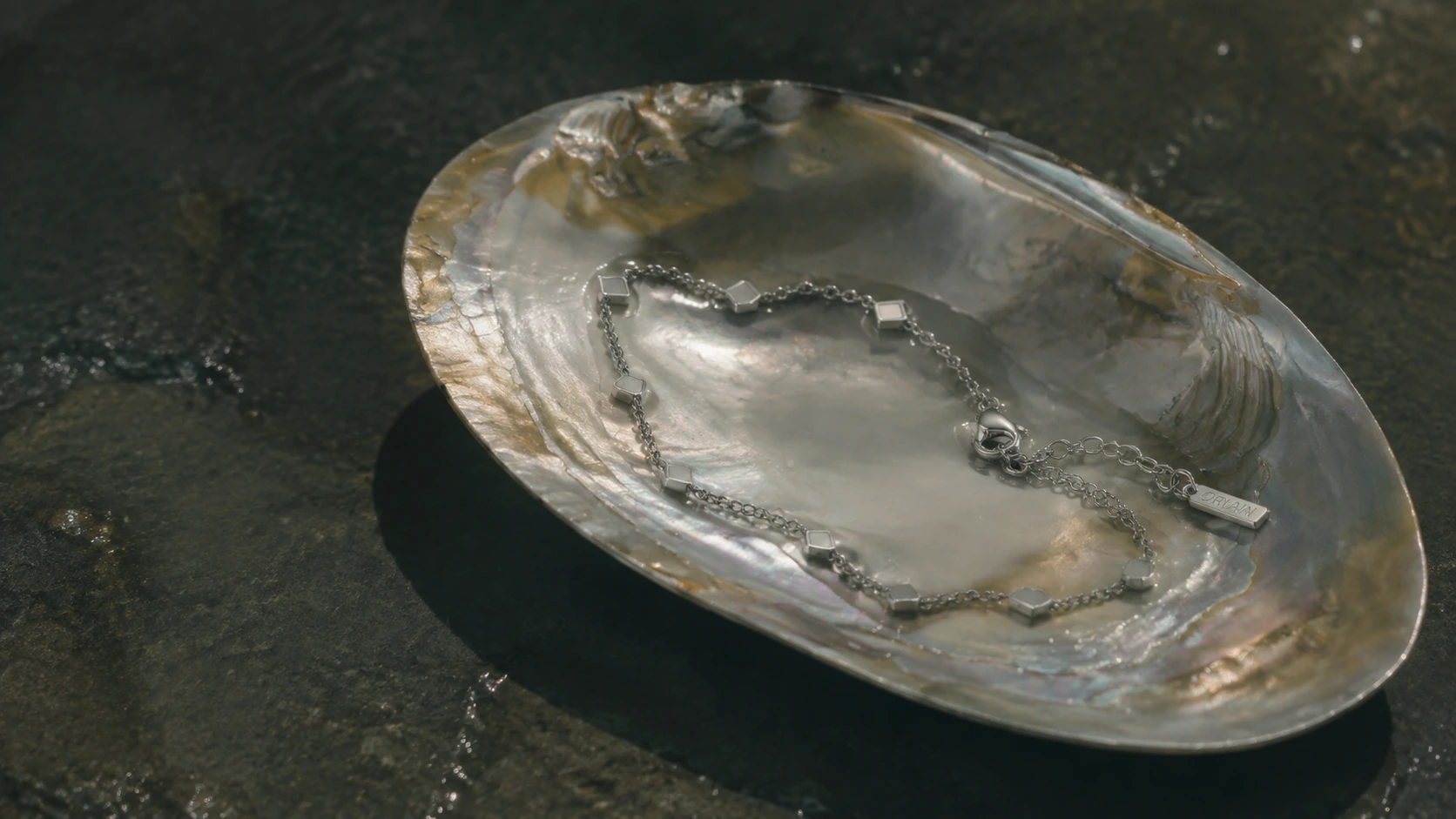
Square elements interrupt a fine line.
Here the subject is not the element but the space between them. Remove the gaps and you have Linear. Widen them and the form dissolves. The rhythm lives in the interval.
Santorini is the signature form of Study I because it shows the thought of the whole study most clearly: that a form consists not of what is added, but of what remains between the parts.
Why this makes a difference when worn
The four subjects are not poetry on a spec sheet. They describe how the pieces behave:
- Cuban reads as a plane and sits most discreetly beside a watch.
- Linear is the clearest form and the one most readily read as design.
- Serpentine moves the most and is the least rigid.
- Santorini has the strongest drawing of its own and asks for the most room on the arm.
Which suits which wrist is covered in more detail in Which men's bracelet suits me.
Four objects, permanent
Study I is not an edition and not a season. The four forms are permanent objects; they are not kept artificially scarce and will not be replaced by a successor collection.
A study does not end when it is sold. It ends when the next question has become more interesting.