

Material & care · 2 min
Does stainless steel jewellery discolour? 316L, water and sweat
Does 316L stainless steel jewellery discolour? The difference between the base material, surface deposits and coating wear – explained plainly.
ORVAIN Editorial ·
Contents
When jewellery turns darker or loses colour after a short time, it is particularly annoying. Which is why stainless steel is so often advertised in absolute terms.
The reality is more nuanced: uncoated 316L stainless steel does not tarnish the way silver does. Its surface can still look dull from deposits. And on coated jewellery, the coating itself can wear away with use.
Tarnishing and soiling are not the same thing
Silver reacts with components of its environment and darkens. What sets 316L apart is covered in 316L stainless steel in jewellery.
On a steel bracelet, a dull surface is usually one of these:
- skin oil,
- soap residue,
- limescale,
- cream,
- sweat,
- dust in the gaps between links.
These deposits can normally be removed carefully.
So why can skin still discolour?
Skin discolouration has several possible causes: cosmetics, sweat, residue, other metals, or a worn coating.
A mark on the skin should therefore not automatically be blamed on the 316L base material. If your skin is irritated, take the bracelet off. Medical reactions cannot be diagnosed through a general article about jewellery.
What happens with gold-tone jewellery?
Gold-tone steel jewellery carries an additional visible coating.
Friction against desk edges, a watch, other bracelets or clothing wears on that surface over time. Chlorine, salt water, perfume and cleaning agents can also affect how long a coating lasts.
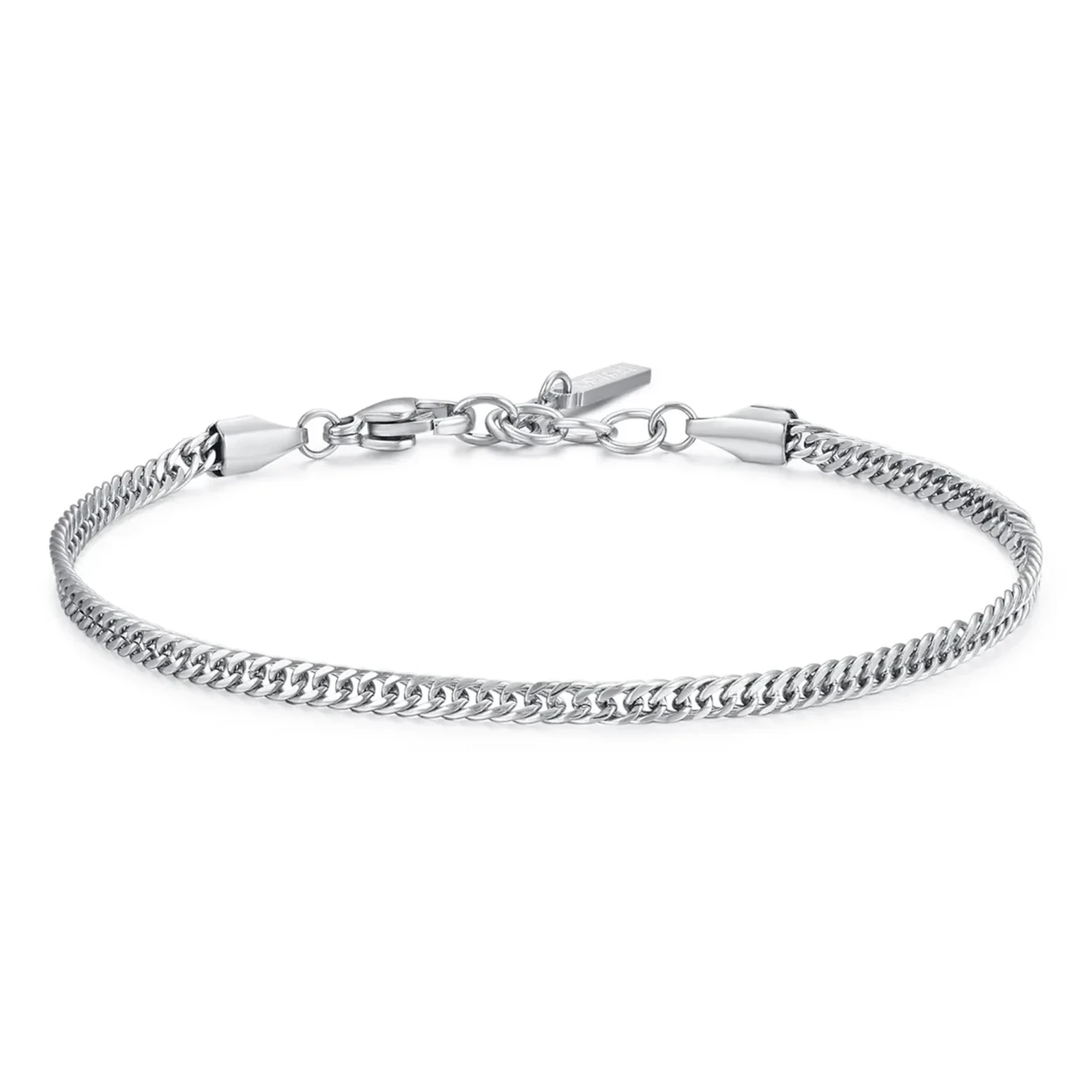
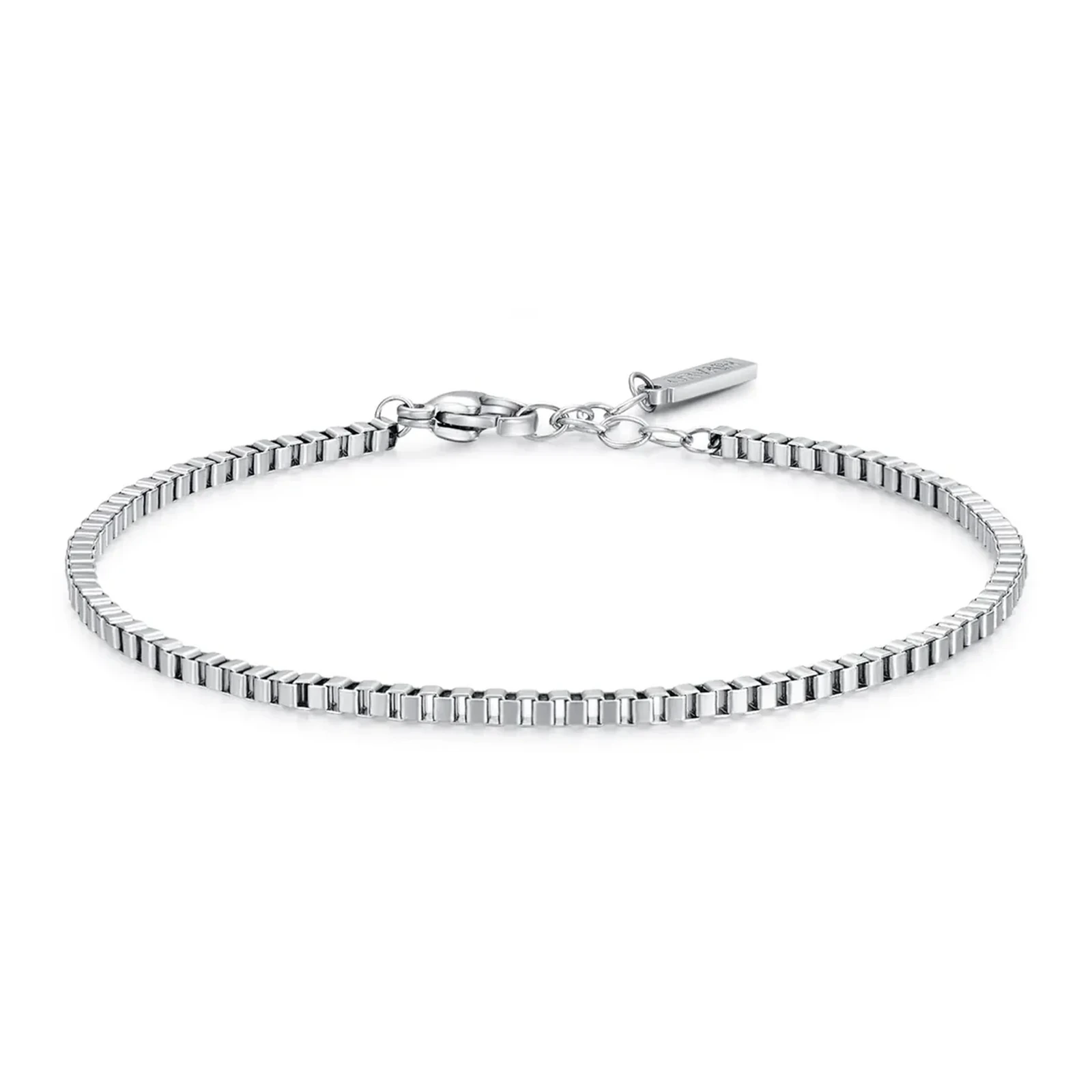
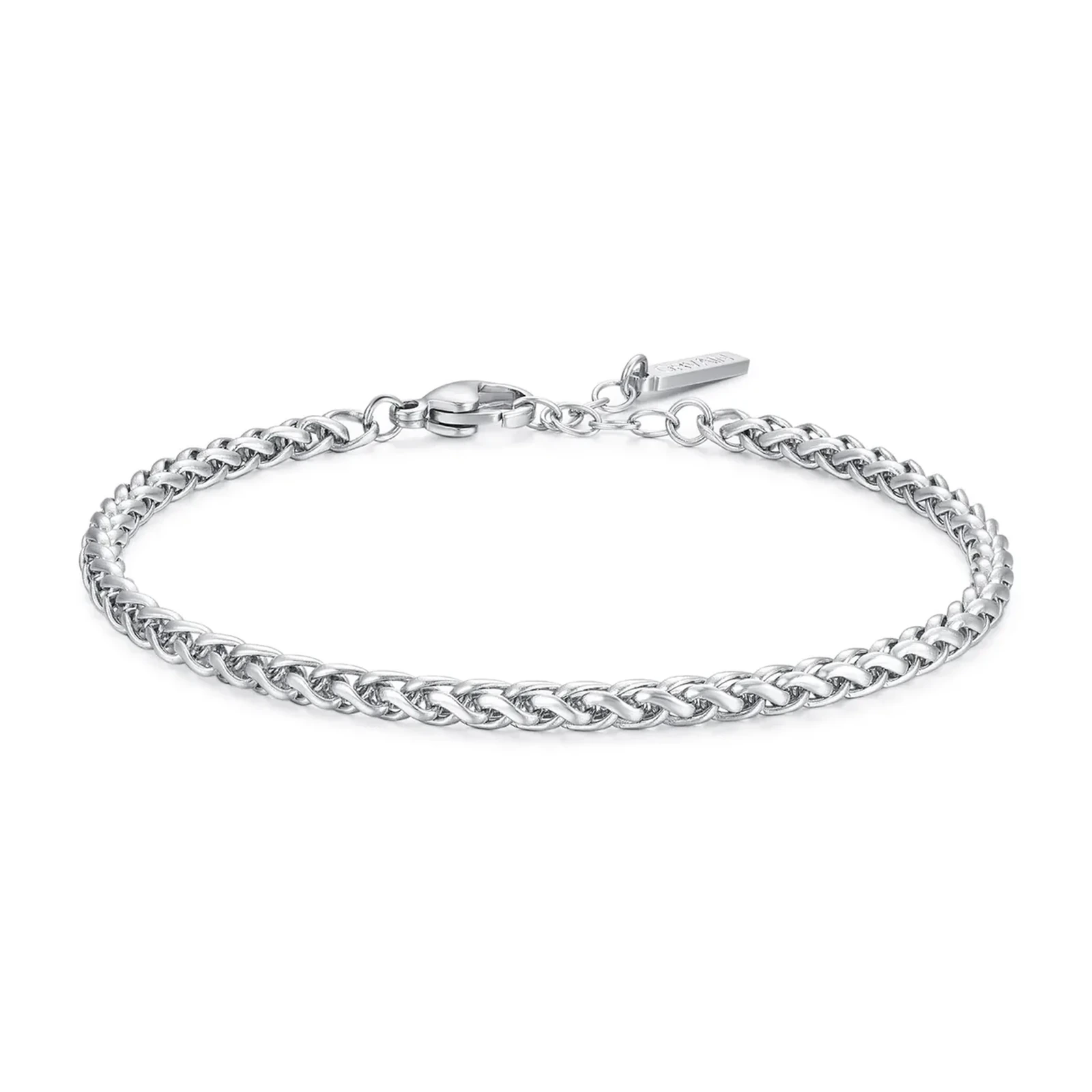
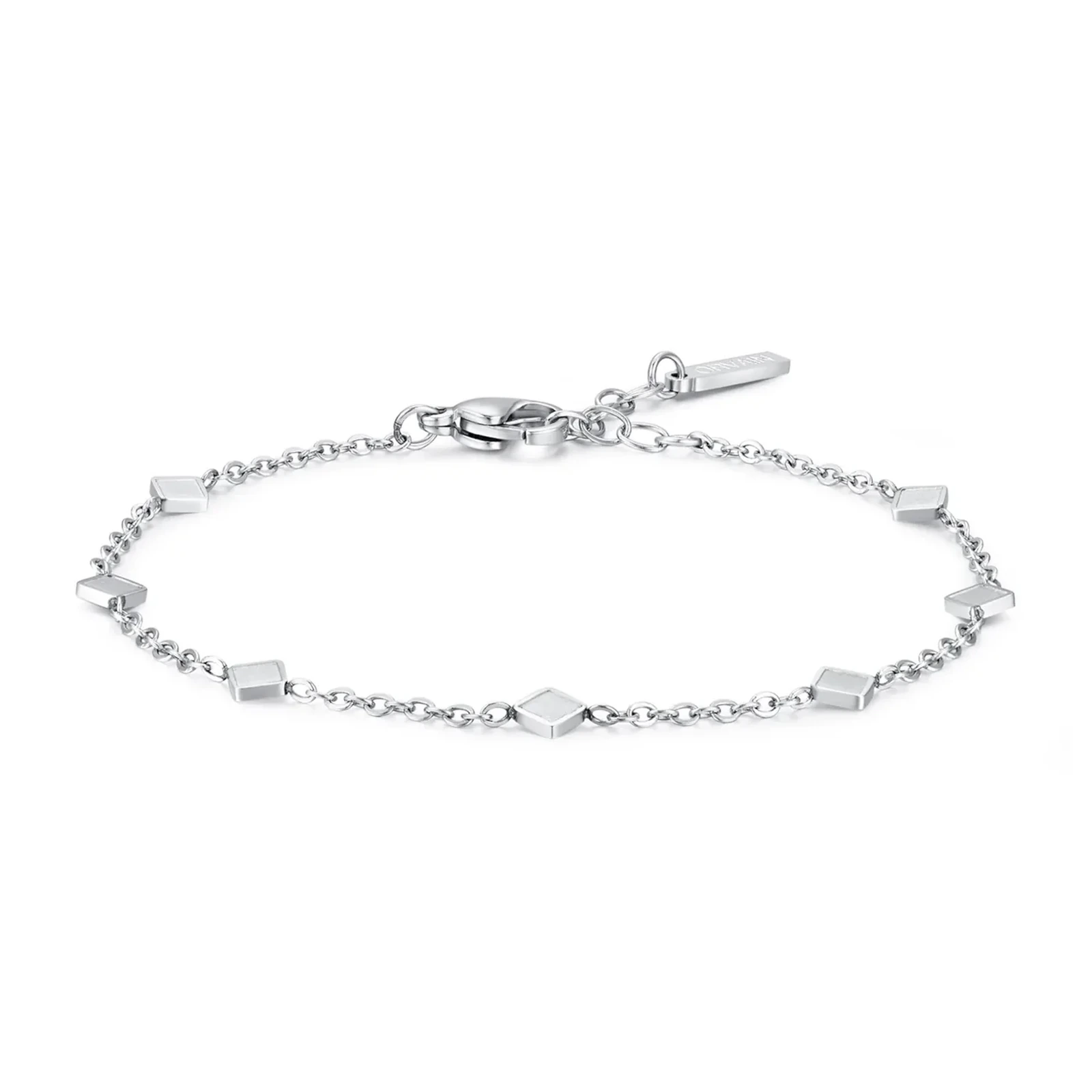
Available bracelets
How to avoid early changes
- Put jewellery on after cream and perfume.
- Avoid contact with household cleaners.
- Clean it after heavy sweating.
- Rinse after salt or chlorinated water.
- Store it dry and separately.
- Never use scouring agents.
What if the bracelet looks dull?
Start with a soft cloth.
If that is not enough, use lukewarm water and a small amount of mild soap. Then rinse with clean water and dry completely.
On coated surfaces, do not use aggressive polishes. They remove material rather than improving the surface.
Conclusion
316L stainless steel is more colour-stable and easier to look after than many classic costume jewellery materials. Even so, steel needs cleaning from time to time.
On coated bracelets it is not only the base material that decides, but the quality of the coating and how hard it is used.
Common questions
Does 316L stainless steel turn green?
Uncoated 316L should not oxidise green the way copper-bearing costume jewellery does. Residue and coatings have to be considered separately.
Why does my bracelet look matte?
Usually there are deposits of skin oil, soap or cosmetics on the surface.
Can I polish discolouration away?
On uncoated steel, suitable gentle care can help. Coated surfaces should not be polished aggressively.